
A small bathroom can be challenging to organize when there is limited room for towels, toiletries, cleaning supplies, and everyday essentials. Cabinets may feel overcrowded, countertops can quickly become cluttered, and even simple tasks may become inconvenient when everything does not have a designated place.
The good news is that a small bathroom does not necessarily need a larger floor plan to become more functional. Thoughtful storage solutions can help you use available wall space, organize existing cabinets, and create convenient places for everyday items.
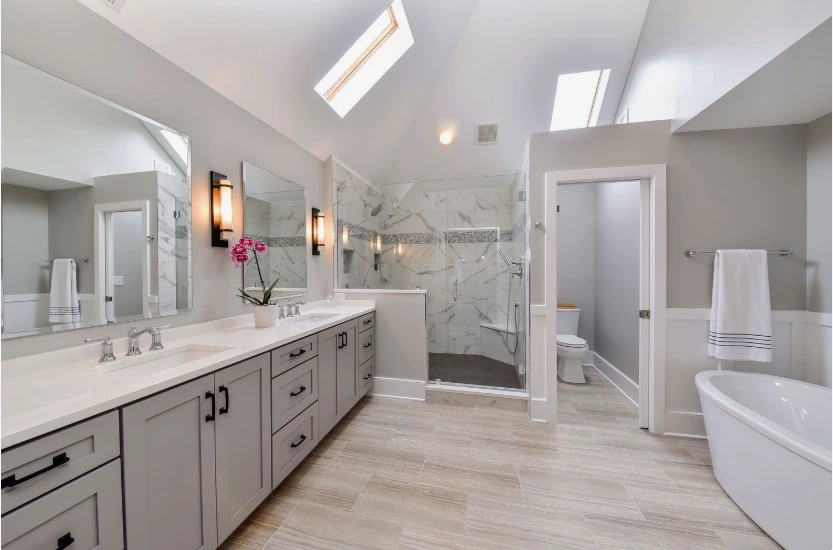
From built-in bathroom storage and recessed shower niches to floating vanities and over-the-toilet cabinets, several practical improvements can make a noticeable difference.
Whether you are organizing an existing bathroom or planning a renovation, these bathroom storage ideas for small spaces can help you create a more comfortable, organized, and visually open room.
1. Install a Recessed Medicine Cabinet
A recessed medicine cabinet is one of the most practical storage solutions for a small bathroom. Instead of extending into the room like a traditional cabinet, it fits into an available wall cavity.
This design provides storage for everyday essentials while keeping the bathroom’s layout relatively open.
A recessed medicine cabinet above the vanity can hold:
- Toothbrushes and toothpaste
- Skincare products
- Grooming accessories
- Small personal care items
- Other frequently used toiletries
Many models also include mirrored doors, allowing the cabinet to serve as both a mirror and a storage unit.
Before installation, check the wall for plumbing, electrical wiring, and structural components. Not every wall has enough suitable space for a recessed cabinet, so the existing construction should be evaluated before making an opening.
2. Add Built-In Shower Niches
Shower products often occupy valuable space around the bathtub or shower enclosure. Bottles placed on the floor or along the edges of the tub can make the area feel cluttered.
A built-in shower niche provides a designated place for shampoo, conditioner, soap, and other bathing essentials.
A well-planned shower niche can:
- Keep bathing products within easy reach
- Reduce the need for bulky shower caddies
- Help maintain a cleaner shower area
- Create a coordinated appearance with the surrounding tile
For additional flexibility, consider a multi-level niche with separate sections for different products.
The niche should be positioned at a convenient height and designed around the products you use. Waterproofing is essential because an improperly installed shower niche can allow moisture to enter the surrounding wall.
If you are already planning a shower renovation, incorporating a niche during construction is often more practical than modifying a finished shower later.
3. Choose a Floating Bathroom Vanity
Traditional bathroom vanities can make a small room feel crowded, particularly when they have bulky cabinets that extend to the floor.
A floating vanity is mounted to the wall, leaving visible floor space underneath. This can make the room appear more open while still providing storage for bathroom essentials.
For the best results, choose a floating vanity with:
- Deep drawers for toiletries
- Separate compartments for personal care items
- A compact design that fits the available wall
- A countertop with enough space for daily use
Drawers can be particularly useful because they allow you to organize smaller products and access items stored toward the back.
Before installation, confirm that the wall can support the vanity’s weight. Proper mounting support and suitable plumbing connections are important for a secure installation.
4. Make Use of the Space Above the Toilet
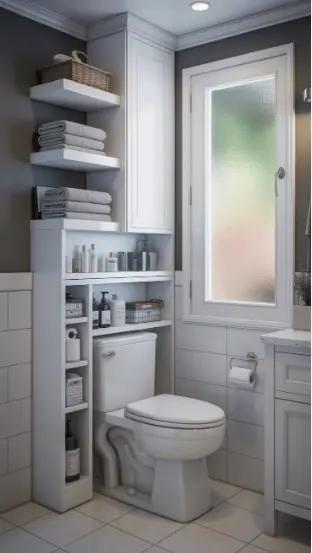
The wall above the toilet is often one of the most underused areas in a small bathroom.
Installing an over-the-toilet cabinet or shelving unit can create additional storage without taking up much floor space.
There are several ways to use this space:
Open shelves: Suitable for folded towels, decorative baskets, and frequently used products.
Enclosed cabinets: Useful for keeping toiletries, cleaning supplies, and backup products out of sight.
Tall storage units: Provide multiple storage levels for bathrooms with sufficient ceiling height.
Wall-mounted baskets: Offer convenient storage for lightweight items.
Choose a design that matches the bathroom’s existing fixtures and finishes. Make sure the storage unit is securely installed and does not interfere with comfortable use of the toilet.
5. Install Floating Shelves on Unused Walls
Floating shelves are a simple way to add bathroom storage without installing a full cabinet.
They can be placed above the vanity, beside the mirror, near the bathtub, or on an otherwise unused wall.
Use floating shelves to organize:
- Folded towels and washcloths
- Small baskets of toiletries
- Skincare products
- Extra toilet paper
- Decorative bathroom accessories
For a small bathroom, two or three carefully positioned shelves may provide more practical storage than a large freestanding unit.
Choose materials and finishes that are suitable for bathroom humidity. Avoid placing moisture-sensitive items in areas where they may come into direct contact with water.
When installing shelves, use appropriate wall anchors or mounting hardware based on the wall construction and the expected weight.
6. Organize the Space Under the Bathroom Sink
The cabinet beneath the bathroom sink can provide valuable storage, but plumbing often makes the space difficult to organize.
Instead of allowing products to accumulate around the pipes, use organizers designed to work around the sink’s plumbing.
Useful options include:
- U-shaped organizers that fit around drainpipes
- Pull-out baskets
- Stackable storage bins
- Two-tier sliding shelves
- Small containers for toiletries
Pull-out organizers are especially useful because they make it easier to reach items stored at the back of the cabinet.
Separate everyday essentials from backup products so that the most frequently used items remain accessible.
Keep the area around water supply lines and drain connections clear enough to identify leaks or access plumbing when necessary.
7. Add a Tall, Narrow Linen Cabinet
A small bathroom may not have enough room for a traditional linen closet, but a narrow storage cabinet can provide a similar function.
Tall cabinets make use of vertical space and can store more items than their small footprint suggests.
A narrow linen cabinet may be suitable for:
- Towels and washcloths
- Extra toilet paper
- Personal care products
- Bathroom cleaning supplies
- Spare toiletries
If the bathroom has an unused corner or a narrow gap beside the vanity, consider whether a slim cabinet could fit there.
Before choosing a cabinet, measure its width, depth, and height. Check door clearance and ensure the cabinet will not make the bathroom difficult to move through.
For a coordinated appearance, choose a cabinet that complements the vanity and other bathroom fixtures.
8. Use the Inside of Cabinet Doors
Cabinet doors provide additional storage space that is easy to overlook.
Small organizers attached to the inside of a cabinet door can hold lightweight items without taking up room on the shelves.
Consider using:
- Small hooks for accessories
- Slim racks for toiletries
- Hanging baskets for personal care products
- Organizers for cleaning supplies
- Holders for hair accessories
This solution is particularly useful for homeowners who want to improve bathroom organization without replacing their existing cabinets.
Before installing an organizer, check that it will not interfere with the cabinet’s shelves, plumbing, or closing mechanism.
Use mounting methods suitable for the cabinet material and the weight of the items being stored.
9. Install Hooks Instead of Additional Towel Racks
Towels can occupy a surprising amount of space in a small bathroom.
A traditional towel bar may only accommodate one or two towels, while multiple hooks can provide a more flexible arrangement.
Hooks can be installed:
- Behind the bathroom door
- Beside the shower
- On an unused wall
- Near the bathtub
- Along an available section of wall
They are useful for bath towels, hand towels, washcloths, and robes.
For shared bathrooms, assigning each household member a separate hook can help keep towels organized.
Choose rust-resistant hardware designed for humid environments. For wall-mounted hooks, use appropriate anchors or secure the mounting hardware to a suitable support.
10. Create Storage in Shower Corners
If a built-in shower niche is not practical, corner storage can provide a useful alternative.
Corner shelves and shower caddies use space that might otherwise remain unused.
Common options include:
Corner shelves: Suitable for soap, shampoo, and other bathing products.
Tension-pole shower caddies: Provide adjustable storage without permanent wall installation.
Wall-mounted baskets: Offer convenient access to frequently used products.
Corner ledges: Can be incorporated into a shower renovation for a more integrated appearance.
When selecting shower storage, consider the amount of space available, the weight of the products, and the materials used.
Avoid overcrowding the shower with too many shelves or organizers. A simple arrangement can make the area easier to clean and maintain.
11. Add a Pull-Out Laundry Hamper
Dirty clothes and towels can quickly make a small bathroom feel disorganized.
A pull-out laundry hamper can provide a designated place for laundry while keeping it out of sight.
Depending on the available space, you can consider:
- A hamper integrated into the bathroom vanity
- A pull-out hamper inside a cabinet
- A narrow freestanding laundry basket
- A compact hamper placed beside the vanity
Built-in laundry storage can be especially useful during bathroom remodeling because it can be planned alongside the cabinetry.
Make sure the hamper has enough ventilation for damp towels and clothing. Wet laundry should not remain in a closed container for extended periods.
12. Use a Mirrored Cabinet Instead of a Standard Mirror
A mirrored cabinet combines two useful bathroom features in one fixture.
Instead of installing a separate mirror and storage cabinet, you can use a medicine cabinet with mirrored doors.
This arrangement is particularly useful above the vanity because it provides storage without requiring another piece of furniture.
When choosing a mirrored cabinet, consider:
- Available wall width
- Cabinet depth
- Internal shelf arrangement
- Door-opening clearance
- Lighting and electrical requirements
A recessed mirrored cabinet can be especially useful when the wall structure allows it.
For bathrooms with limited wall depth, a surface-mounted cabinet may be easier to install, although it will extend farther into the room.
13. Make Use of the Space Behind the Bathroom Door
The space behind the bathroom door can provide additional storage without requiring a major renovation.
An over-the-door organizer or hanging rack can be used for towels, robes, and lightweight bathroom accessories.
Other options include:
- Multi-hook door racks
- Hanging towel organizers
- Slim storage pockets
- Compact accessory baskets
Before installing a door-mounted organizer, check the door’s clearance and make sure it will not hit the vanity, toilet, or other fixtures.
This approach can be especially useful in bathrooms where the available wall space is already occupied.
14. Choose Multi-Functional Bathroom Furniture
In a small bathroom, furniture that serves more than one purpose can help reduce clutter.
For example, a vanity with built-in drawers can provide storage while supporting the sink. A mirrored cabinet can combine a mirror with shelving. A compact storage stool can provide seating while holding bathroom accessories.
Other practical options include:
- A vanity with an integrated laundry hamper
- A storage bench with concealed compartments
- A mirror cabinet with adjustable shelves
- A wall-mounted cabinet with towel storage
- A compact shelving unit with hooks
Before choosing multi-functional furniture, consider whether it will fit comfortably within the bathroom layout.
The goal is to add useful storage without making the room difficult to move through.
15. Organize Bathroom Products With Baskets and Containers
Additional cabinets are not always necessary. Sometimes, organizing existing storage areas can make the bathroom more functional.
Baskets and containers can separate products into categories and make frequently used items easier to find.
For example, you can organize supplies into:
- Daily toiletries
- Skincare products
- Hair care products
- Extra towels
- Cleaning supplies
- Backup bathroom essentials
Clear containers can make it easier to identify stored items, while labeled baskets can help family members return products to the correct place.
Avoid filling every shelf and basket. Leaving some space makes it easier to access products and maintain an organized bathroom.
16. Consider a Built-In Storage Bench
If the bathroom has enough space, a built-in bench can provide seating and additional storage.
A bench may be positioned beneath a window, beside a bathtub, or along an available wall.
Depending on the design, it can include:
- Drawers underneath
- A lift-up storage compartment
- Open cubbies for towels
- A concealed laundry compartment
A built-in bench is generally more suitable for bathrooms with enough floor space to accommodate it comfortably.
If the bench is installed in a wet area, the materials and construction must be appropriate for moisture exposure. Any storage compartment should also be designed to prevent damp towels from remaining enclosed.
How to Choose the Best Bathroom Storage for Your Space
The most effective bathroom storage solution depends on the room’s dimensions, layout, existing fixtures, and the number of people using it.
Before purchasing organizers or planning a renovation, consider the following factors.
Measure the Available Space
Measure the width, height, and depth of the areas where you plan to add storage.
Check the clearance around doors, drawers, toilets, sinks, and shower enclosures.
A storage unit that fits the wall may still interfere with normal movement if it extends too far into the room.
Identify What Needs to Be Stored
Consider which items you use daily and which can be stored elsewhere.
Everyday toiletries should remain easy to access, while backup products and seasonal items can be placed in less accessible storage.
This helps prevent unnecessary clutter and makes it easier to choose the right cabinet or organizer.
Use Vertical Space
Wall-mounted shelves, tall cabinets, hooks, and over-the-toilet storage can provide additional capacity without taking up much floor space.
However, storage should remain within comfortable reach. Frequently used items should not be placed on shelves that are difficult to access.
Select Moisture-Resistant Materials
Bathrooms experience regular humidity and occasional water exposure.
Choose suitable materials and finishes for shelves, cabinets, and hardware. Proper ventilation can also help protect bathroom storage from moisture-related problems.
Consider Installation Requirements
Some storage solutions can be installed with basic hardware, while others require changes to the wall or existing fixtures.
Recessed cabinets, built-in shower niches, floating vanities, and built-in benches may require professional installation.
Before modifying walls, check for plumbing, electrical wiring, and structural components.
When Should You Consider Bathroom Remodeling for More Storage?
Simple organizers can improve a bathroom’s functionality, but they may not be enough when the existing layout has significant storage limitations.
A bathroom remodeling project may be worth considering when:
- The existing vanity does not provide enough storage.
- The bathroom has no convenient place for towels.
- The shower lacks space for bathing products.
- The room has unused wall space that could accommodate built-in storage.
- The existing fixtures make the bathroom feel crowded.
- You want to combine storage improvements with updated fixtures and finishes.
A well-planned renovation can introduce a more functional vanity, recessed storage, improved cabinetry, and better use of available space.
The right approach depends on the bathroom’s dimensions, existing construction, and the improvements you want to make.
For some bathrooms, replacing the vanity may be enough. Others may benefit from a more comprehensive renovation that includes changes to the shower, cabinetry, or fixture placement.
Frequently Asked Questions
What Is the Best Storage Solution for a Very Small Bathroom?
Recessed medicine cabinets, floating shelves, over-the-toilet storage, and compact vanities with drawers are practical options for very small bathrooms. These solutions use available wall or cabinet space while keeping the floor relatively clear.
How Can I Add Storage to a Small Bathroom Without Remodeling?
You can add storage without a full renovation by installing suitable shelves, using cabinet organizers, adding hooks, and placing a slim storage unit in an unused corner. Over-the-door organizers and baskets can also help improve organization.
How Do I Organize a Small Bathroom With No Storage?
Start by removing products you no longer use. Then organize everyday essentials into containers, use vertical wall space, and consider adding a mirrored medicine cabinet or over-the-toilet shelving unit.
If the bathroom has no suitable storage areas, a vanity replacement or built-in cabinet may provide a more permanent solution.
Are Floating Vanities Good for Small Bathrooms?
Yes. Floating vanities leave visible floor space underneath, which can make a small bathroom appear more open. Models with drawers and cabinets can also provide convenient storage for toiletries and personal care products.
Is Built-In Bathroom Storage Worth It?
Built-in storage can be useful when a bathroom has limited floor space or insufficient existing cabinets. Recessed medicine cabinets, shower niches, and built-in shelving can provide storage without extending far into the room.
The best option depends on the wall construction, available space, and installation requirements.
Can Bathroom Remodeling Create More Storage Space?
Yes. Bathroom remodeling can improve storage through better vanity configurations, recessed shelving, built-in cabinets, and more efficient fixture placement.
The amount of additional storage depends on the existing layout and the changes that can be made.
Improve Your Bathroom Storage With Desoto’s On Call Handyman
A small bathroom can become more functional with the right storage solutions. By making use of vertical space, organizing existing cabinets, and choosing suitable fixtures, you can reduce clutter and improve everyday convenience.
Whether you need additional shelving, better vanity storage, built-in shower niches, or a more comprehensive bathroom update, careful planning can help you make better use of the available space.
Desoto’s On Call Handyman provides handyman and home improvement services for homeowners looking to improve their living spaces.
If you are considering bathroom improvements, contact Desoto’s On Call Handyman to discuss your project and explore practical ways to make your bathroom more organized and functional.