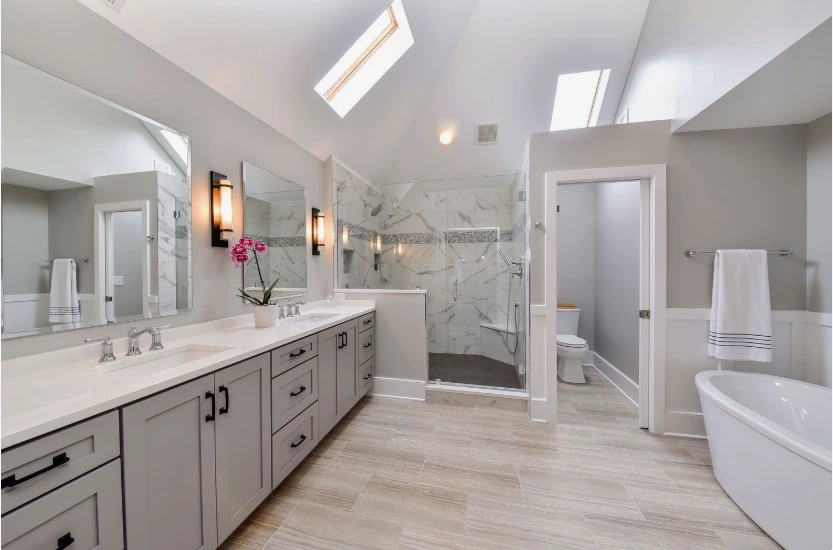

Choosing the right bathroom tiles is an important part of planning a bathroom remodeling project. Bathroom tiles affect more than the appearance of your space. They also influence floor safety, moisture protection, cleaning requirements, and the overall functionality of your bathroom. With so many materials, colors, sizes, and patterns available, selecting the right option can feel overwhelming.
Whether you are updating an older bathroom, replacing damaged flooring, or planning a complete bathroom renovation, it is important to consider how each tile will perform in a wet environment. The best choice depends on where the tiles will be installed, how much maintenance you are comfortable with, and the design you want to achieve.
In this guide, we will explain the different types of bathroom tiles, what to consider before purchasing them, and how to select options that complement your bathroom remodeling plans.
1. Understand the Different Types of Bathroom Tiles
Before choosing a tile design, understand the materials available. Each type has different characteristics, maintenance requirements, and installation considerations.
Ceramic Tiles
Ceramic tiles are a popular option for residential bathrooms because they are available in many colors, patterns, and finishes. They are generally easy to clean and work well on bathroom walls and floors when the appropriate product is selected.
They can be a practical choice for homeowners looking for attractive bathroom tile ideas without choosing a more expensive material.
Porcelain Tiles
Porcelain tiles are made from refined clay and fired at high temperatures. They have low water absorption, making them a suitable option for many bathroom floors and shower areas.
They are available in different textures and finishes, including designs that resemble natural stone or wood. When selecting porcelain tiles, check the product’s slip-resistance rating, especially for bathroom floors that regularly get wet.
Natural Stone Tiles
Natural stone tiles, including marble, granite, and travertine, can create an elegant bathroom appearance. Each piece has natural variations in color and pattern, giving the surface a distinctive look.
However, some natural stone materials require regular sealing and specific cleaning products. Before choosing stone tiles, consider the maintenance involved and whether the material is appropriate for your intended installation area.
Glass Tiles
Glass tiles are commonly used for decorative bathroom features, shower accents, and backsplashes. Their reflective surfaces can help make smaller areas appear brighter.
They are usually better suited to selected wall applications rather than every bathroom surface. Proper installation and product selection are important for achieving a consistent finish.
2. Choose Tiles Based on Where They Will Be Installed
Not every bathroom tile is suitable for every surface. The requirements for bathroom flooring differ from those for shower walls or decorative features.
Bathroom Floors: Choose tiles designed for floor use with an appropriate slip-resistance rating. Textured porcelain and suitable ceramic tiles are common choices.
Shower Walls: Select tiles specifically rated for wet-area wall applications. Consider their water absorption, cleaning requirements, and compatibility with the shower installation system.
Shower Floors: Small-format tiles are often useful because their additional grout joints can help accommodate the slope needed for drainage. Select a product with suitable slip resistance for wet conditions.
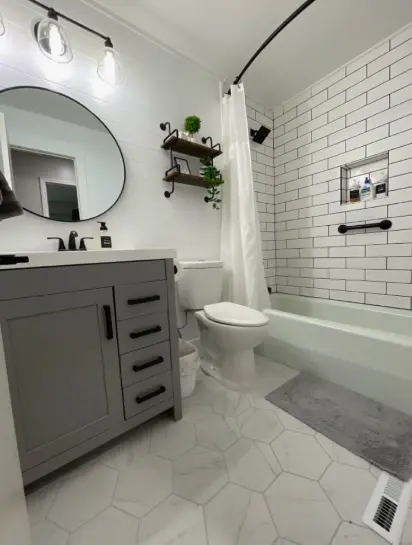
Bathroom Walls: Larger tiles can create a clean, modern appearance with fewer grout lines. Ceramic, porcelain, and selected decorative tiles can all work well.
Vanity Backsplashes: Smaller decorative tiles or simple ceramic designs can complement the vanity without making the bathroom feel visually crowded.
Matching the tile to its installation location helps improve the appearance and practical performance of your bathroom.
3. Consider Slip Resistance and Bathroom Safety
Bathroom floors regularly come into contact with water, soap, and cleaning products. This makes slip resistance an important consideration, especially around showers, bathtubs, and sinks.
When comparing bathroom flooring options, look for products specifically designed for floor installation and check their available slip-resistance information.
A few things to consider include:
- Choose textured or suitable matte-finish tiles for wet floor areas.
- Avoid selecting glossy tiles for shower floors without confirming their slip resistance.
- Consider smaller tiles for shower floors where additional grout joints may improve traction.
- Make sure the selected tiles are suitable for the expected amount of water exposure.
- Keep the bathroom floor clean to reduce soap and product buildup.
If accessibility is part of your bathroom remodeling plans, also consider the transition between the shower floor and the surrounding bathroom flooring.
4. Select the Right Tile Size for Your Bathroom
Tile size can change how spacious and balanced a bathroom looks. The right selection depends on the room dimensions, layout, and installation area.
Large-Format Tiles
Large tiles can make a bathroom appear more open because they create fewer grout lines. They work particularly well on larger floors and shower walls. However, the surface must be properly prepared, and installation requires careful attention to alignment and slope.
Small-Format Tiles
Smaller tiles are useful for shower floors, decorative sections, and areas with curves or more complicated layouts. Their additional grout lines can also provide more traction when the right tile is selected.
Mosaic Tiles
Mosaic tiles come in different shapes, colors, and patterns. They can be used for shower floors, accent walls, and decorative borders. Their installation may require more attention because of the number of individual pieces and grout joints.
For a balanced appearance, avoid using too many different tile sizes and patterns in the same bathroom.
5. Pick Colors and Patterns That Complement Your Bathroom
Tile color plays an important role in the overall bathroom design. It can make the room feel brighter, more spacious, warmer, or more modern.
Here are a few design options to consider:
- White and Light Gray: These colors create a clean appearance and work well in bathrooms with limited natural light.
- Beige and Neutral Shades: These tones provide a warm appearance and complement wood-style vanities and natural finishes.
- Dark Gray and Charcoal: Darker tiles can create contrast and add a modern look when balanced with suitable lighting.
- Marble-Look Tiles: These designs bring the appearance of natural stone without requiring actual marble.
- Wood-Look Tiles: These can introduce a warmer design while offering the practical characteristics of the selected ceramic or porcelain product.
Before making a final decision, compare tile samples with your bathroom vanity, wall colors, fixtures, and lighting. A tile that looks attractive in a showroom may appear different under your bathroom’s lighting conditions.
6. Check Water Resistance and Maintenance Requirements
Bathrooms experience regular moisture, humidity, and temperature changes. Choosing appropriate tiles and installing them correctly are both important for managing these conditions.
Porcelain tiles generally have lower water absorption than standard ceramic tiles, while natural stone may require additional sealing depending on the material.
However, tiles alone do not make a shower or bathroom waterproof. Proper waterproofing membranes, suitable installation materials, sealed transitions, and correctly installed plumbing fixtures are also important.
Consider these maintenance factors before choosing your tiles:
- How frequently will the surface need cleaning?
- Does the material require periodic sealing?
- Is the tile resistant to common bathroom cleaning products?
- Will the grout need additional maintenance?
- Are replacement tiles available if a section becomes damaged?
Choosing a tile based on both appearance and maintenance requirements can make your bathroom easier to care for over time.
7. Consider Grout Color and Tile Layout
Grout is an important part of bathroom tile installation. Its color and placement can influence the final appearance of the entire surface.
Matching grout with the tile color creates a more uniform appearance, while contrasting grout makes the tile pattern more noticeable.
For example, light gray grout with white tiles can create a subtle finish, while darker grout can emphasize individual tile shapes.
You should also consider the tile layout:
- Straight Lay: Tiles are installed in aligned rows for a simple, clean appearance.
- Brick Pattern: Each row is offset to create a traditional layout.
- Herringbone Pattern: Rectangular tiles are arranged in a zigzag pattern for added visual interest.
- Diagonal Layout: Square tiles are installed at an angle to create a different visual effect.
Discuss the layout with your remodeling contractors before installation, particularly if the bathroom has uneven walls, corners, or complicated floor dimensions.
8. Set a Realistic Budget for Bathroom Tile Installation
Your tile budget should include more than the price of the materials. The overall cost of a bathroom remodeling project can depend on the tile type, room dimensions, existing surface condition, preparation requirements, and installation complexity.
When planning your budget, account for:
- Tile material and quantity.
- Additional tiles for cutting and future replacements.
- Removal and disposal of existing flooring or wall tiles.
- Subfloor or wall surface preparation.
- Waterproofing materials where required.
- Tile adhesive, grout, and installation supplies.
- Labor and finishing work.
Natural stone, intricate patterns, and large-format tiles may require different installation methods and additional labor.
Request detailed estimates from a remodeling company before starting the project. Comparing the materials, preparation work, and installation included in each estimate can help you understand the actual scope of the work.
9. Work With Experienced Bathroom Remodeling Contractors
Even high-quality tiles may not produce the expected results if they are installed incorrectly. Uneven surfaces, poor grout application, incorrect drainage slopes, and inadequate waterproofing can create problems after installation.
When looking for bathroom remodelers near me, consider contractors who understand bathroom layouts, tile installation, surface preparation, and wet-area requirements.
Before hiring a contractor, consider the following:
- Ask about previous bathroom remodeling projects.
- Discuss the tile materials you want to install.
- Confirm how the existing floor or wall will be prepared.
- Ask how shower waterproofing and drainage will be handled.
- Request a clear estimate covering materials and labor.
- Discuss the expected project timeline.
A professional remodeling service should be able to explain the installation process and help you understand which materials are appropriate for your bathroom.
If you are planning several home improvements at the same time, you may also want to work with a remodeling company that can coordinate different parts of your residential project.
10. Common Mistakes to Avoid When Choosing Bathroom Tiles
Before finalizing your tile selection, be aware of a few common mistakes that can affect the appearance and functionality of your bathroom.
Choosing Tiles Only for Their Appearance: A beautiful tile may not be suitable for a wet floor or shower area. Always check the product’s intended application.
Ignoring Slip Resistance: Smooth, glossy tiles may become slippery when wet. Check the manufacturer’s slip-resistance information before using them on bathroom floors.
Forgetting About Grout Maintenance: Light-colored grout can show dirt more easily, while some grout types require sealing or additional care.
Using Too Many Patterns: Combining several bold tile designs can make a small bathroom feel crowded. Choose a main tile design and use accents selectively.
Not Ordering Enough Tiles: Cutting, fitting, and future repairs may require additional material. Discuss the required quantity with your installer before purchasing.
Overlooking Waterproofing: Tile and grout are not substitutes for a proper waterproofing system. Shower areas need appropriate waterproofing beneath the finished surface.
Avoiding these mistakes can help you make more informed decisions before beginning your bathroom renovation.
Transform Your Bathroom With the Right Tile Selection
Choosing bathroom tiles involves balancing design, safety, moisture resistance, maintenance, and installation requirements. Ceramic, porcelain, natural stone, and mosaic tiles each offer different advantages depending on where they will be used.
Before purchasing materials, consider your bathroom layout, available budget, and the amount of maintenance you are comfortable with. It is also important to make sure that the selected tiles are suitable for their intended installation areas.
At Desoto’s On Call Handyman, we provide home remodeling services for homeowners planning bathroom improvements and other residential projects. If you are considering new bathroom tiles, an updated shower, or a broader bathroom remodeling project, our team can help you discuss your project requirements and the work involved.
Contact Desoto’s On Call Handyman to discuss your bathroom remodeling project and take the next step toward updating your space.